
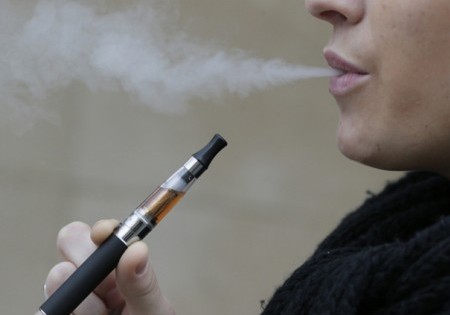
The World Health Organization (WHO) is urging nations to ban usage of e-cigs indoors because its vapors contain some chemicals potentially harmful to human health. Just before stopping e-cig vaping, you might want to know another facet to it.
A midst fierce campaign to outlaw the use of e-cigarettes in public areas, there are recent scientific findings that the same e-cig toxins are exhaled in human breath. This means that the trace amounts of pollutants that are released when vaping e-cigarettes are the same as what every human in this planet is releasing when exhaling.
The Fight against E-Cigarettes
Lawmakers express concern for people who might be at risk to second hand e-cig vapor, which is why they are pushing its ban in indoor public space. Lawmakers insist that banning e-cigs indoors will ensure that air quality will not be compromised. There are observations, however, that lawmakers have intentionally omitted other scientific findings generated in the studies.
For example, Dr. Igor Burstyn’s study concludes that the trace amounts of chemicals present in more than 9,000 clouds of vapor studied are so minor they don’t pose any threat to bystanders. Compared to the magnitude of pollution from heavy traffic and manufacturing plants, these trace amounts are comparatively insignificant. In facts, five of the volatile organic compounds (VOC) and five metals detected in e-cig vapor are even normal ambient air components in the outdoor air in cities such as Los Angeles.
Considering that there are other more polluted cities around the world, the toxic compounds in e-cigs vapor is nothing so immensely alarming.
The Real Threat
It may come as a surprise to learn that the human body contributes to air pollution because it emits the very same chemicals that lawmakers blame to e-cigs. In a study done at a Los Angeles university, findings showed that the human breath contains five specific carcinogens, namely: acetaldehyde, acetone, butanone, formaldehyde, and isoprene. These are the same toxins found in second hand vapor. This means that even when a person is not vaping, he/she is still exposed to certain trace levels of these toxins simply because he/she is breathing.
In 1999, a study was conducted to measure human breath emissions. The results were published online in 2011 revealing an array of VOCs naturally produced an emitted by the human body contributing to air pollution. Formaldehyde, for instance, has been detected in equal amount in both human breath and e-cig vapor. This suggests that human breath is most likely among the main source of formaldehyde detected during laboratory tests on passive vaping.
The Search for Better Argument against E-Cigarettes
Various researches show that none of the air is clean and pure, whether indoor or outdoor. However, the results clearly point out that electronic cigarettes are not a threat to public health in any way than human breath. Banning e-cigs on the basis that they contain toxins is as good as the argument on banning breathing as well. Maybe it’s time for lawmakers to find more justifiable reasons to refute the use of e-cigarettes. What they claim are flatly debunked by little science.
The truth is that electronic cigarettes are not the real enemy. Vapor production is not as harmful as what’s being portrayed in the campaign. People, including the lawmakers, must rise above the assumption that anything aside from air is poisonous and cancerous. Ultimately, the e-cig community needs a great amount of lobbying to educate the public that electronic cigarettes are not exactly what lawmakers make them to be to scare people.