

E-cigarettes have been at the center of various accusation since hitting the Chinese market back in 2004. Many concerns have been legitimate and with the recent explosive growth of the vaporizer market, it was to be expected. Unfortunately, being that e-cigs have proven to be the best and most popular alternative to tobacco, it sometimes feels like tobacco lobby groups are putting out poor studies and causing for bad journalism to scare the public into having a bad contention about them. Recent news stories surfaced with ridiculous claims, accusing e-cigarettes of marketing their product to children. For many years now, critics have been trying to claim that electronic cigarettes and advanced personal vaporizers alike cause the smoking rate to rise, but trying to make us believe that vaping is a way to introduce and invite non-smokers to pick up tobacco is backwards thinking. It servers no valuable purpose but does slow down and negate the innovation that e-cigarettes have been able to bring.
As with all other substances restricted to anyone under legal age, some teenagers will always be curious to explore e-cigarettes just as they will with alcohol. The idea to condone it is wrong and no one wants to see minors holding an e-cigarette, but the sad reality is that most smokers pick up tobacco smoking at an early age. As young teenagers start smoking and keep at it, the chances of them ever quitting through their lifetime become slim. E-cigarettes have proven to be an effective alternative that may help those younger adults already addicted to move away from smoking tobacco by making a switch to vaporizers and reducing the chances of remaining addicted to tobacco for life.
So the scare is that kids will utilize e-cigarettes first and move on to smoking, but studies have shown different. A CDC study conducted from 2011-2012, demonstrated that a bit more than 9 out of 10 teenagers who tried e-cigarettes had already previously smoked tobacco many times prior. Only a mere 7.2% of teenagers had not smoked prior to trying a smokeless vaporizer device, and only tried because a friend whom already smoked had purchased one, making it accessible. Additionally, what was not included in the survey is that not one case of a non-smoker teenager who tried out an e-cigarette ended up continuing to use either or, being e-cigs or smoking tobacco. Keep in mind the survey consisted of those who tried e-cigarettes even a single time, causing it to lack any conclusive data.
Nicotine in electronic cigarettes is most likely to be less addictive than tobacco smoke as it is absorbed much slower than when smoking a cigarette but there are more ways to utilise them in beneficial ways, as recent studies prove them to outperform nicotine patches, gums and other nicotine alternatives. Although we rightfully remain against the idea of teenagers using e-cigs, if they stick to smoking until becoming young adults, electronic smokeless cigarettes can be used with guidance to gradually reduce the nicotine intake, giving them a real fighting chance against smoking early in their addiction while likely reducing the harm done from tobacco smoking.
Theodore Wagener, Ph.D. and Scott Leischow from the Mayo Clinic’s cancer prevention and control program, presented the results of a study surveying over 1,300 college students ay American Association for Cancer Research Conference back in October of last year. Once again the survey showed that there was no newly attracted students smoking due to e-cigarettes and that almost all of those who had at least tried electronic cigarettes, we’re already nicotine users through tobacco smoke. The survey solidified the lack of evidence suggesting that e-cigarettes we’re creating additional young smokers or e-cigarette nicotine users alike, showing that only about 2% of non-smokers had a chance of becoming smokers. If we look at the hard truth, they would most likely have picked up cigarettes by choice.
Yet, the poor argument persisted in appearing in media publications, but as time went by, more studies completely refuted the poorly conceived notion while stats continue to show that non-smokers are just not into using electronic cigarettes or any smokeless vaporizer devices. The latest survey from ASH UK included surveying adults from 2010 to 2014 and concluded that non-smokers we’re not prone to pick up an e-cigarette at all. The survey demonstrated the effective results it had over the course of the last 4 years.
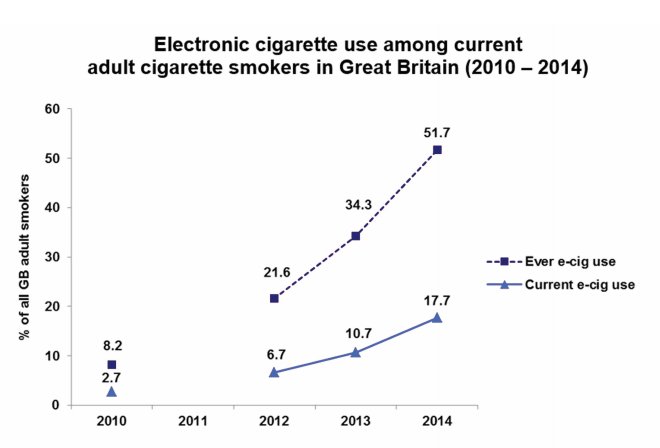
The shear growth of user base is worth noting, while only 8% of smokers had tried e-cigs back in 2010, the number jumped to almost 52% in 2014. The regular daily e-cigarette users remained low at only 2.7% in 2010 and almost 18% by 2014. An estimated 2.1 million adults in the UK are using e-cigarettes and from those, 700,000 are now ex-smokers while the rest continue to use e-cigarettes along with tobacco. Also noting that only 1.1% of non-smokers every tried e-cigarettes and virtually none remained users. The study touched base on many variables, making it a valid, useful study and solid image of how e-cigarettes are affecting smoking rates and spending rates of smokers in the UK.
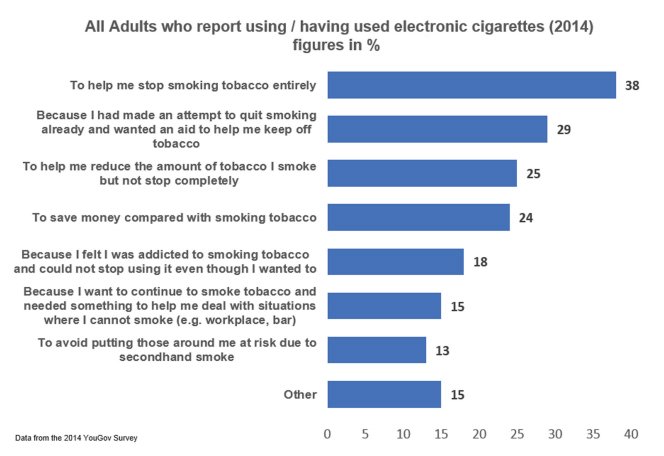
The argument of e-cigarettes becoming a gateway to smoking remains valid in some people’s mind because it remains against smoking altogether, but truth be told, any ex-smoker that was able to make that important life change with the help of e-cigs will have a different story to tell, one that can be backed up by facts. The latest FDA regulation proposals also show that the notion of e-cigs increasing smoking rates among children was not proven and for now have chosen to leave the flavor debate alone. We can only hope that false information and invalid studies start to diminish and that regulators make the right choices in terms of new applicants being able to produce quality e-cig products without having large sums and studies to pay for, restricting the market to big tobacco and established enterprises.