
Based on figures from the CDC (Centers for Disease Control and Prevention) approximately 19.5 million individuals are using e-cigarettes today. The same report also says that 43.9 percent of people using e-cigs had intentions to use conventional cigarettes. All these tidbits fail to give the information necessary for e-cigarettes to obtain FDA approval, and Dr. Vivek, the new Surgeon General, has issued a statement saying that this new technology should be welcomed if it is proven that e-cigarettes can help people kick their addiction to cigarettes.
The Need for Information
While Dr. Vivek admits that there is a “desperate” need for information on e-cigarettes, but he fails to prescribe the studies that would answer this need. Indeed, if unbiased and complete information is needed to provide the perimeters for policies and guidelines on e-cigarettes, his call for such research should have been made clearly.
Sally Satel writes in Forbes Magazine that a necessary ingredient in formulating policies on e-cigs is to have an honest discussion on the subject. However, she believes that current bad propaganda makes such a discussion close to impossible because public health experts are distorting reports and studies on e-cigarettes.
Misinformation to Shoot Down E-Cigarettes
Part of what’s wrong with current articles on e-cigs is the way information is twisted to present only the possible harm that this invention can bring. Studies cite possible ill-effects of vaping while neglecting to ensure that experiments simulate real settings and reasonable variables. One particular study mentioned by Satel is a report claiming that vaping with an extremely high setting of 5.0V would result in the release of formaldehyde, a known carcinogen. Not only that, the study showed that the formaldehyde emitted was five to fifteen times the amount emitted by cigarettes.
The first flaw in this study, according to Satel, is the fact that a setting of 5.0V for vaping is so intolerable hot no one would use it. Where then is the sense in using to draw implications on whether e-cigs are harmful or not? This question becomes especially relevant when the same study showed that using a setting of 3.3V no formaldehyde was detected.
The Biased Perspective
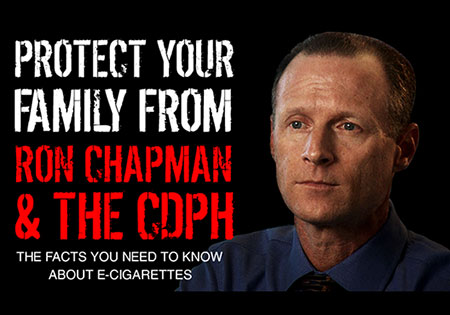
The pervading biased perspective is the first problem standing in the way of getting proper information on e-cigarettes. The California Department of Public Health has referred to vaping as a community health threat, virtually declaring it as a gateway for smoking. The report makes no mention of comparing e-cigs to conventional cigarettes, and it fails to consider the fact that e-cigs are meant to for smokers who want to give up the habit. Any study on e-cigs is incomplete if it fails to look at this invention in relation to conventional cigarettes. Conveniently, not a whole lot is mentioned about the absence of carcinogenic tar in e-cigs, or the reduced environmental impact it has, or the minimal effect it has on non-smokers in the vicinity.
Gaps in Research
The Schroeder Institute points to several important research gaps regarding e-cigarettes and it at least sees that these gaps need to be filled in parallel studies that involve subjects smoking conventional cigarettes and those smoking e-cigarettes. However, there is no move to determine how reduced risks are when smokers use e-cigs rather than conventional cigarettes. Studies are eager to point out that there is not enough evidence to prove that vaping reduces smoking, and some quarters say vaping can lead to nicotine addiction. And yet, no studies have been made to compare the nicotine drawn from e-cigs to that drawn from nicotine patches.
All this determination to shoot down an invention based on lack of evidence, incomplete information, and misleading studies cannot stem merely from pure intentions. Before discarding e-cigs as harmful, analyze who gets hurt when e-cigs replace cigarettes, and look for the money trail.